Can Dogs Eat Pickles? 7 Unsafe Risks + 5 Safe Alternatives
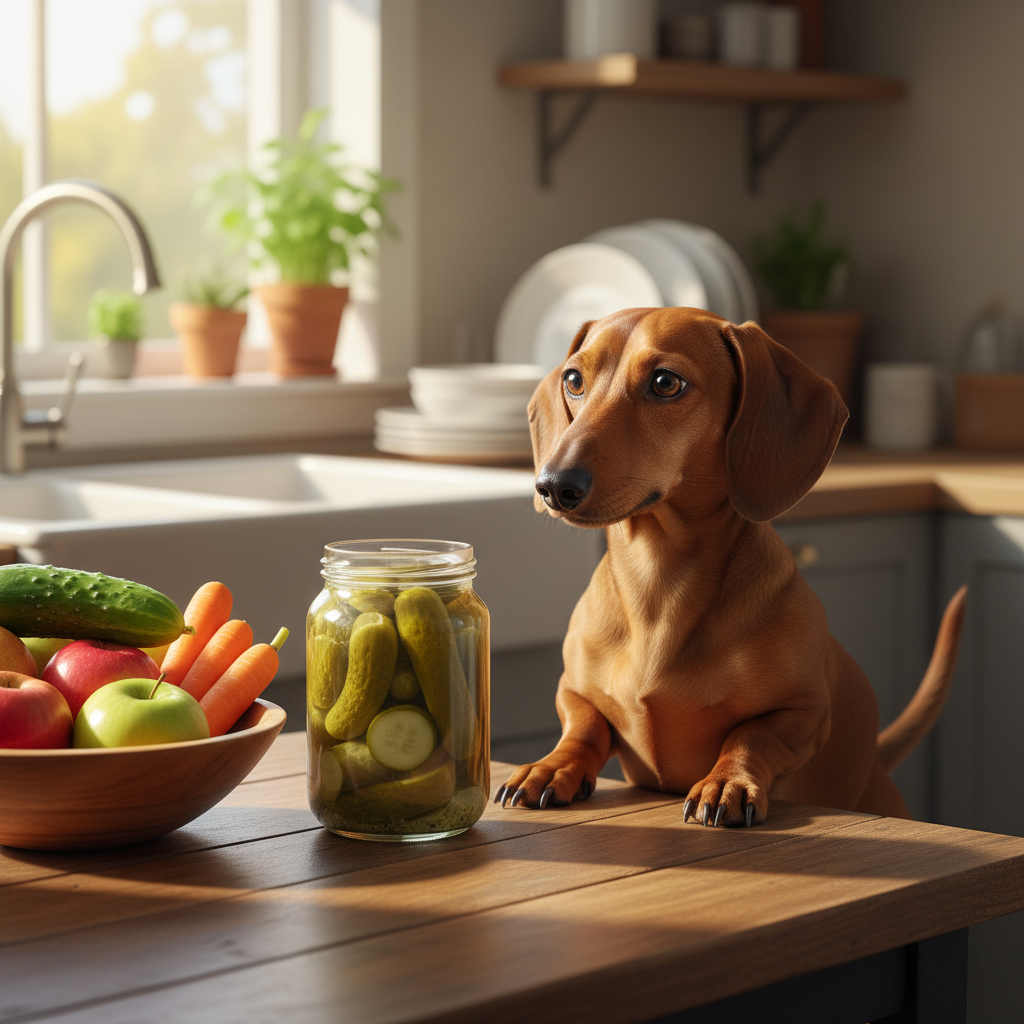
Can dogs eat pickles? Usually no. Pickles aren’t typically “toxic,” but they’re often very high in sodium and may contain unsafe ingredients for dogs. (For Dachshunds, small amounts can matter more because they’re small-bodied.)
If you’re here because your dog already ate pickles: check the label for garlic/onion or xylitol, offer fresh water, and call your vet if your dog ate a lot, drank pickle juice, or shows symptoms like vomiting, diarrhea, wobbliness, tremors, or seizures.
Educational content only; it’s not a substitute for veterinary advice.
Can Dogs Eat Pickles? Quick Answer (Featured Snippet-Ready)
Can dogs eat pickles? Typically not. Pickles are cucumbers soaked in brine (often salt, vinegar, and spices), so the sodium and additives are the real problem—not the cucumber itself.
Safer swap: plain cucumber slices.
Are Pickles Toxic to Dogs?
Pickles are generally not toxic to dogs in the way chocolate or grapes are, but that doesn’t mean they’re a good treat. Many “people foods” can be risky for dogs because recipes vary and sodium can be very high.
Some pickles (and relishes) also include ingredients like garlic or onion, which can damage red blood cells and lead to hemolytic anemia.
Why Pickles Are Unsafe (Even if Your Dog “Seems Fine”)
1) High Sodium (Salt)
Pickles are preserved in salty brine, which is why sodium is the main concern. A large sodium load in a short time can cause excessive thirst, vomiting, diarrhea, loss of balance (ataxia), tremors, and even seizures.
2) Vinegar + Spices Can Upset the Stomach
Even when nothing is “toxic,” brine and seasonings can irritate the digestive tract and trigger GI upset in some dogs.
3) Recipes Vary (Hidden Risks)
There isn’t one standard pickle recipe, so treat each jar as an “unknown risk” until you check the ingredient list.
Pickle Ingredients to Avoid (Red Flags)
Do not intentionally feed pickles (or relish) that contain:
- Garlic or onion (including powders): These Allium ingredients can cause oxidative damage to red blood cells and hemolytic anemia.
- Xylitol (a sugar alcohol sweetener): It can cause profound hypoglycemia (low blood sugar), and some dogs develop severe liver injury. Tip: If a product says “sugar-free,” always check the ingredient list for xylitol.
- “Hot & spicy” seasonings: Spicy varieties can be more irritating and don’t remove the sodium risk.
What If My Dog Ate Pickles?
Most dogs will be okay after a tiny amount, but if you’re asking “can dogs eat pickles after stealing one,” the safest approach is to act fast and monitor closely.
Do This Now
- Remove access to the jar and any remaining pieces.
- Check the ingredient list for garlic, onion, or xylitol.
- Estimate how much your dog ate (one slice vs. half a jar) and your dog’s size.
- Watch for vomiting, diarrhea, excessive thirst, weakness, wobbliness/ataxia, tremors, or seizures.
Call Your Veterinarian Immediately If
- Your dog drank pickle juice (especially a lot), because it’s not safe and can be extremely high in salt.
- The ingredients include xylitol, garlic, or onion.
- Your dog shows neurologic signs (wobbliness, tremors, seizures).
Bring the jar/label to the vet if you go in—ingredients matter for treatment decisions.
Can Dogs Drink Pickle Juice?
No. Pickle juice is not safe for dogs because it’s highly salty and may contain other risky ingredients. If you’re wondering can dogs eat pickles but “not the juice,” the brine is often the bigger problem. If your dog drank a meaningful amount (for example, got into a jar), contact your veterinarian.
Are Some Pickles “Less Bad” Than Others?
Pickles still aren’t a recommended treat, but here’s a practical ranking:
| Item | Better or worse for dogs? | Why |
|---|---|---|
| Plain cucumber (fresh) | Better | Same crunch without brine/salt. |
| Dill pickles | Worse | Brine = high sodium; spices vary. |
| Sweet / bread-and-butter pickles | Often worse | More sugar/additives; may include onion/garlic depending on recipe. |
| Hot & spicy pickles | Worst | Added irritants + sodium; ingredient risk can be higher. |
| Relish | Often worse | May contain onion/garlic powder and added sugar; label matters. |
Why Dachshunds Deserve Extra Caution
Dachshunds are small-bodied compared to many breeds, so a “small bite” can be a bigger dose per pound. They also benefit strongly from consistent weight control, so salty human snacks that add empty calories and cause bloating don’t help their backs. So when owners ask can dogs eat pickles, Dachshund households should be extra cautious.
Safe Crunchy Alternatives (Better Than Pickles)
If your dog loves the crunch, use these instead:
- Plain cucumber slices.
- Carrots (cut into safe, bite-size pieces).
- Apple slices (remove seeds and core).
- Green beans (fresh/frozen; avoid salty canned versions).
Introduce any new food slowly and stop if it causes stomach upset.
Still unsure can dogs eat pickles in any form? Use the FAQs below for quick answers.
FAQ
Can dogs eat pickles in small amounts?
Pickles are generally not toxic, but they’re not a healthy treat because they’re high in sodium and may contain unsafe ingredients.
Can dogs eat gherkins?
Gherkins are still pickled, so the same brine/sodium/additive issues apply.
Are garlic or onion in pickles dangerous for dogs?
Yes—garlic and onion (Allium species) can cause oxidative red blood cell damage and hemolytic anemia, with signs that may take days to appear.
What are signs of too much salt in dogs?
A large sodium load in a short time can cause excessive thirst, vomiting, diarrhea, ataxia (loss of balance), tremors, and seizures.
What if my dog ate an entire jar of pickles?
Contact your veterinarian immediately, and bring the jar so they can review the ingredient list and help estimate the risk.
Bottom line: if you’re asking can dogs eat pickles, it’s best to skip them and choose a fresh, low-sodium crunch instead.Veterinary References
- Merck Veterinary Manual: Xylitol toxicosis in dogs
- MSD Veterinary Manual: Garlic and onion (Allium) toxicosis