IVDD in Dachshunds: The Ultimate Survival Guide (Stages, Surgery Costs & Recovery)
Facing a diagnosis of IVDD in Dachshunds is a nightmare scenario for any owner. One minute they are chasing a ball, the next they are dragging their back legs. This guide cuts through the panic to give you the facts.
Intervertebral Disc Disease (IVDD)—often called a slipped disc—is the leading cause of paralysis in Dachshunds. Because they are “chondrodystrophic” (long-backed), their discs age faster than other breeds. According to the Cornell University College of Veterinary Medicine, genetics play the biggest role in this condition.

⚠️ Emergency: When to Seek Immediate Care
IVDD can worsen in hours. Seek urgent veterinary care immediately if your Dachshund shows:
- Sudden Paralysis: Inability to walk, stand, or dragging back legs.
- Loss of Control: Inability to urinate/defecate or leaking urine.
- Extreme Pain: Yelping when picked up, trembling, or a rigid “hunched” neck.
Important: Keep your dog’s spine straight while transporting them. Do not let them jump into the car.
What is IVDD in Dachshunds?
Why is IVDD in Dachshunds so common? In long-backed breeds, discs degenerate much faster than in other dogs. Between each vertebra in the spine is a disc that cushions movement. In Doxies, these discs can calcify and burst (herniate) into the spinal canal, crushing the spinal cord.

Early Signs of IVDD in Dachshunds (Don’t Ignore These)
Spotting the early signs of IVDD in dogs is your most powerful tool. Before paralysis sets in, your dog might whisper that they are in pain:
- Reluctance to move: Refusing to jump on the couch or climb stairs.
- The “Hunch”: Arching the back or holding the neck low and stiff.
- Shivering: Trembling without being cold (a classic sign of pain).
- Ataxia: Walking like they are “drunk,” stumbling, or crossing their back legs.
IVDD Stages in Dachshunds (1–5)
Vets use this grading system to determine if surgery is needed. Use this chart to understand the urgency:
| Stage | What You See (Symptoms) | Typical Urgency |
|---|---|---|
| 1 | Pain only: stiff, hunched, reluctant to move. | Same-day visit |
| 2 | Wobbly walk (Ataxia), knuckling, but can stand. | Urgent visit |
| 3 | Non-ambulatory: Can move legs but cannot stand/walk. | Emergency |
| 4 | Paralysis (no movement); deep pain sensation present. | Immediate Emergency |
| 5 | Paralysis with LOSS of deep pain sensation. | Surgical Emergency |
How IVDD is Diagnosed
Diagnosing IVDD in Dachshunds starts with a thorough neurological exam to pinpoint the spinal injury. While X-rays can rule out other issues (like fractures), they cannot see the spinal cord. For a definitive diagnosis—especially if surgery is planned—organizations like the ACVIM recommend an MRI or CT scan to pinpoint the exact disc rupture.
Watch: Veterinarian Explains the Signs of IVDD
IVDD Treatment: Surgery vs. Conservative Management
Treating IVDD in Dachshunds requires a strict plan. Whether you choose surgery or crate rest, consistency is key.
Option 1: Conservative Management (Crate Rest)
For Stage 1 and 2, strict crate rest is often successful. This means 100% confinement for 6-8 weeks. No walking, no furniture, and carried out for potty breaks. This allows the disc to heal and scar over.
Option 2: IVDD Surgery
For Stage 4 and 5 (or worsening Stage 3), surgery is the best chance for recovery. The surgeon removes the disc material to relieve pressure.
The Financial Reality: Be prepared. IVDD surgery costs typically range from $4,000 to $9,000 depending on the region and MRI fees. This is why pet insurance is vital.
Recovery & Prevention: Life After IVDD
While you can’t change genetics, preventing IVDD in Dachshunds often comes down to lifestyle changes.
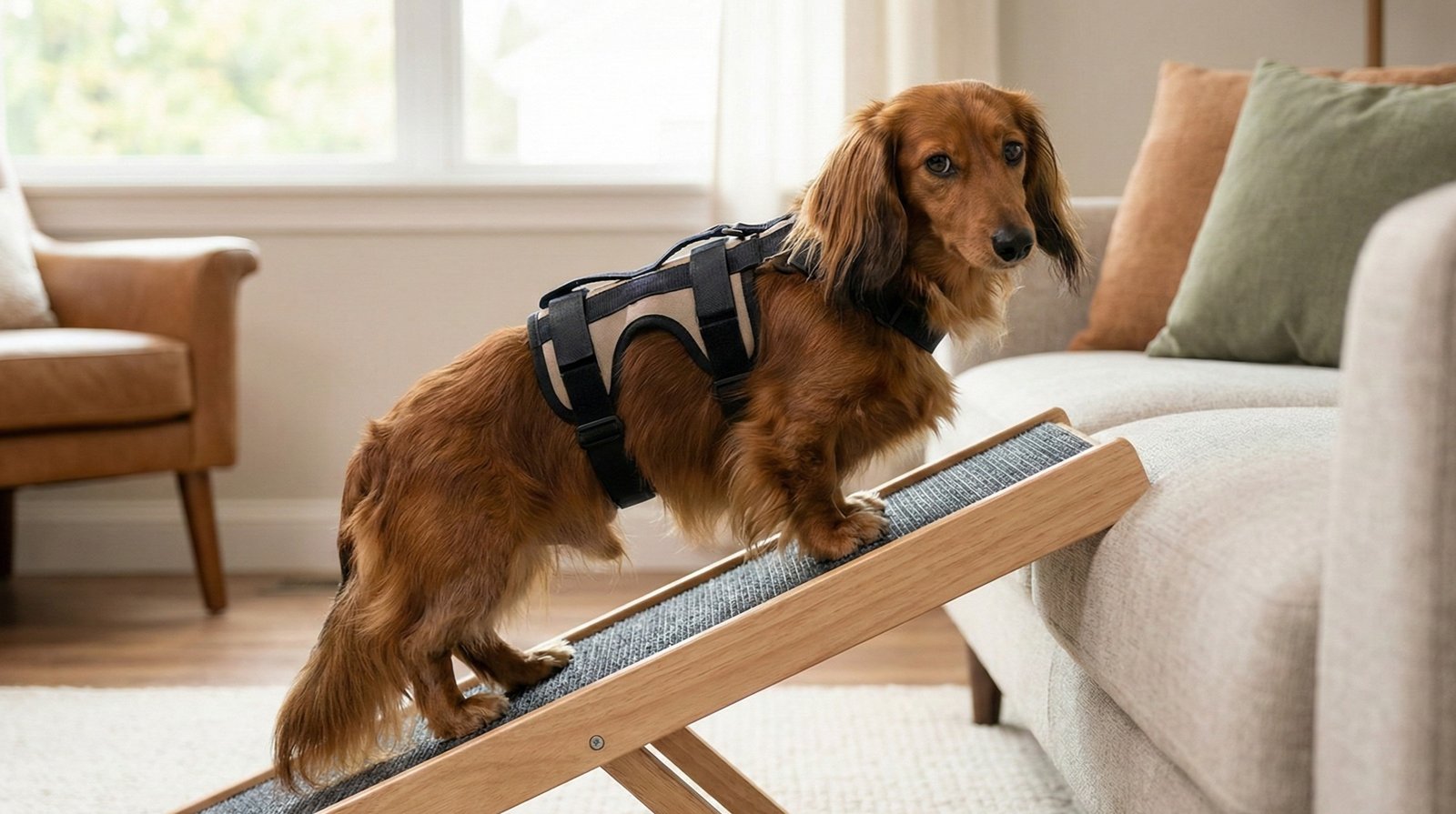
- Ramps are Mandatory: Jumping off a sofa can cause a relapse instantly. Check our guide on Dachshund Stairs vs. Ramps to find the safest setup.
- Watch the Weight: Obesity puts massive strain on the spine. Use our Best Dog Food Guide to keep your Doxie lean.
- Harness Only: Stop using collars for walks. A supportive chest harness reduces neck strain.

FAQ: Frequently Asked Questions
Is IVDD in dogs fatal?
While rarely fatal on its own, untreated severe cases can lead to “Myelomalacia” (softening of the spinal cord), which is fatal. Early treatment is key.
Can IVDD in Dachshunds heal without surgery?
Yes, many Stage 1 and 2 dogs recover fully with strict conservative management. However, Stage 5 dogs have a very poor prognosis without surgery (less than 5% chance of walking again).
How long is recovery?
Expect a minimum of 6 to 8 weeks of restrictions, followed by a slow reintroduction to activity.