
Can Dogs Eat Tomatoes? 7 Safe Tips & What to Avoid
Can dogs eat tomatoes? Yes—most dogs can eat ripe, red tomato flesh in small amounts as an occasional treat.
What about when they’re green or straight from the plant (leaves, stems, and vines)? No—those green parts are higher-risk because they contain more of a toxin called tomatine.
If you’re unsure what your pup ate or they start showing symptoms, contact your veterinarian for guidance.
[Insert Image Block Here]
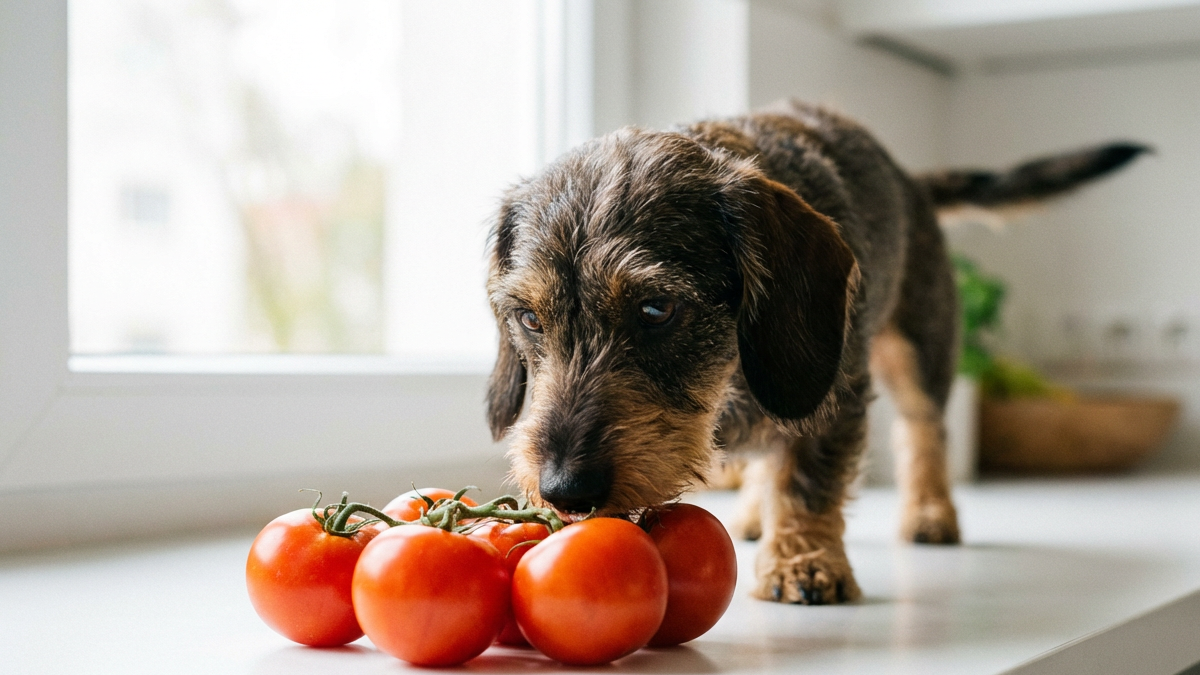
Alt text (include exactly): Can dogs eat tomatoes? A cute Dachshund looking at a safe, ripe red tomato.
Can dogs eat tomatoes? Quick answer (safe vs. unsafe)
If you are wondering, can dogs eat tomatoes safely? Ripe red tomato flesh is usually fine when fed plain and in moderation.
What about unripe or green ones, or the actual plant parts? Avoid those entirely—green tomatoes plus the leaves, stems, and vines are the main concern.
How about in the form of sauce, salsa, or soup? It’s best to keep those away from your dog because tomato-based human foods often include harmful ingredients like garlic or onions.
Safe vs. dangerous checklist
| Tomato item | Can they eat it? | Why |
| Ripe red tomato (plain flesh) | ✅ Yes, in moderation | Too much can cause GI upset, and tomatoes are naturally acidic. |
| Unripe/green tomatoes | ❌ No | Contain more tomatine and may make dogs sick. |
| Tomato plant (leaves/stems/vines) | ❌ No | Toxins are concentrated in the green parts of the plant. |
| Cherry/grape tomatoes (whole) | ⚠️ Only if ripe + cut | Whole small tomatoes or large chunks can be a choking risk, especially for small dogs. |
| Tomato sauce/soup/salsa | ❌ Avoid | Often contains garlic/onion or other add-ins that can be harmful. |
| Ketchup | ❌ Avoid | Ketchup often contains sugar and salt (and may include other unsafe ingredients). |
Why tomatoes can be risky for dogs
The “can dogs eat tomatoes” debate mostly comes down to tomatine, a compound found mostly in the green parts of the nightshade plant and unripe fruit.
According to the American Kennel Club (AKC), as tomatoes ripen, tomatine levels drop significantly, which is why ripe ones are generally safer than green ones. Even when they are safe, too many can still upset your dog’s stomach, and the natural acidity may bother dogs with sensitive digestion.
Symptoms to watch for
Tomatine poisoning is considered rare, but symptoms can happen—especially if a dog gets into the garden and eats plant parts.
Watch for: vomiting, diarrhea, lethargy, hypersalivation (drooling), abdominal pain, loss of coordination, muscle weakness, tremors, seizures, and abnormal heart rhythm (arrhythmia).
Allergic reactions are also possible (though rare) and may include hives, coughing/wheezing, or difficulty breathing. If you notice these severe signs, contact your vet or the ASPCA Animal Poison Control Center immediately.
What to do if your dog ate tomatoes (simple decision guide)
If your dog ate ripe red tomato only
- Remove access to more and offer fresh water.
- Monitor for mild stomach upset (like diarrhea, gas, or vomiting), especially if your dog ate a lot at once.
- If symptoms persist or you’re not sure how much was eaten, contact your veterinarian.
If your dog ate green tomatoes or plant parts
- Treat this as higher risk because green/unripe parts contain more tomatine.
- Call your veterinarian promptly, especially if you see tremors, weakness, loss of coordination, or an abnormal heart rate.
What to tell your vet
- Your dog’s weight, age, and any health conditions or special diet.
- Exactly what was eaten (ripe vs. green vs. leaves/stems/vines), how much, and when.
- Current symptoms (vomiting, diarrhea, drooling, tremors, lethargy, etc.).
How much is okay?
Even when the answer to can dogs eat tomatoes is yes, they should be a treat, not a daily food. A practical rule: treats should make up no more than 10% of your dog’s daily calories, with the rest coming from balanced dog food.
PetMD experts suggest a general serving size of 1/2-inch cubes (about 1–5 pieces depending on dog size), around 2–3 times per week.
7 safe feeding tips
- Choose only ripe, bright red tomatoes (not green).
- Wash thoroughly to remove dirt and pesticides.
- Remove all green parts (stems, leaves, vines).
- Cut into bite-size pieces to reduce choking risk.
- Start small the first time and watch for stomach upset.
- Keep portions modest—the natural acidity can bother sensitive stomachs.
- Keep them as an occasional treat (stay within the 10% rule).
Products dogs should avoid
Usually, it’s best to skip most processed tomato products. Many tomato-based foods (soup, salsa, pasta sauce) include garlic, onion, and other add-ins that are toxic to dogs. If you want to give them that flavor, consider dog foods or treats specifically formulated with tomatoes rather than human recipes.
Preventing garden raids
If you grow your own, keep dogs away from the plants so they don’t chew leaves or eat unripe fruit. A small fence or barrier around the patch can prevent most accidents.
Related guides
- Why do dogs eat grass?
- Can dogs eat onions? (add your link)
- Can dogs eat grapes? (add your link)
- Can dogs eat avocado? (add your link)
Frequently asked questions
Can dogs eat tomatoes like cherry or grape varieties?
Yes—if they’re ripe, plain, and cut into smaller pieces to prevent choking.
Are tomatoes poisonous to dogs?
Ripe red flesh is generally non-toxic in small amounts, but green tomatoes and green plant parts can cause tomatine poisoning symptoms.
My dog ate tomato leaves. What should I do?
Because leaves and stems are higher in tomatine, contact your veterinarian for guidance and watch for symptoms like GI upset, weakness, tremors, or irregular heartbeat.
Is tomato sauce or soup safe?
It’s best to avoid them because they may contain garlic, onion, heavy salt, and other add-ins that are unsafe for your pup.
Medical disclaimer: This article is for informational purposes only and is not a substitute for professional veterinary advice; always check with your veterinarian before giving your dog new foods, especially if your dog has health conditions or is on a prescription diet.